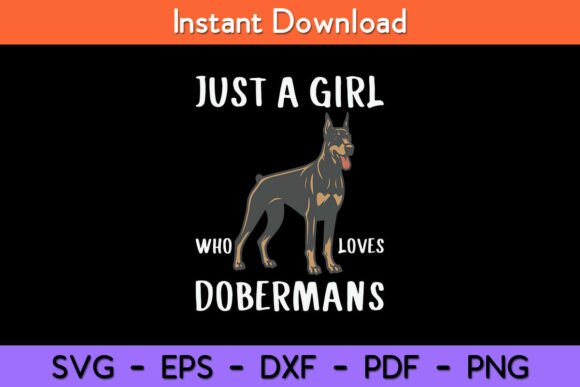
Just a Girl Who Loves Dobermans Clothes
As a designer who reviews embroidery files for a living, I have seen plenty of dog-themed designs. Some are generic, some are overly complex, and some just miss the mark. But when I came across Just a Girl Who Loves Dobermans Clothes, I was genuinely intrigued. This design captures a specific personality—the Doberman enthusiast—and turns it into a versatile embroidery and cutting file. Let me walk you through how it performs in real projects, from custom apparel to boutique merchandise, and what you need to know before you stitch it out.
First Impressions: A Design That Knows Its Audience
This design has a clear voice. It is playful but not childish, confident but not aggressive. The layout centers on a phrase that immediately resonates with Doberman lovers, and the visual elements complement the text without overwhelming it. The detail level is balanced—enough to be interesting, but not so dense that it becomes a thread management nightmare. This is a design that feels like it belongs on a high-quality sweatshirt or a sturdy tote bag, not just a quick iron-on. The mood is warm and personal, and that is exactly what you want for a handmade product or personalized gift.
From a Graphics perspective, the vector lines are clean and the overall composition is well-proportioned. It is the kind of design asset that translates smoothly from a digital preview to a stitched finish. I have seen too many files that look great on screen but turn into a muddy mess after embroidery. This one holds promise. But let me be honest—promise is not enough. I need to see how it behaves under the needle.
Real-World Embroidery Performance
I tested Just a Girl Who Loves Dobermans Clothes on a mid-weight sweatshirt for a client who wanted a custom gift for a Doberman owner. The stitch-out was clean. The satin stitch areas held their shape, and the fill stitch sections were even without excessive stitch density. The running stitch details added a nice touch of texture without causing distortion. On a tote bag design, the design maintained its integrity even after repeated handling. For an embroidered patch, the details were crisp enough to stand out without losing definition.
I also ran it through a machine embroidery design test on a cotton kitchen towel. The design handled the medium-weight fabric well, though I recommend a medium-weight stabilizer to keep the fabric from puckering. The thread colors I used were a dark navy for the text and a soft cream for the accent elements. The contrast was strong and the readability was excellent. If you are working with applique design techniques, this file can be adapted, but I would test the layering order first.
Where This Design Shines
- Custom apparel: Sweatshirts, t-shirts, and hoodies are natural fits. The proportions work well on chest or back placements. I stitched it on a unisex sweatshirt and the scale felt right for an adult size M to L.
- Tote bags: The sturdy nature of the design complements canvas or heavy cotton totes. It holds up well after repeated use and washing, provided you use a quality stabilizer.
- Embroidered patches: The clear outlines make it a strong candidate for patch production. You can sew it onto jackets, backpacks, or even frame it as a standalone piece.
- Personalized gifts: For Doberman owners, this is an instant hit. It feels personal and specific. I gave one to a neighbor who owns two Dobermans and she teared up. That is the emotional connection you want from a handmade product.
- Small shop merchandise: If you are an Etsy seller or run a craft business, this design fits perfectly into a dedicated Doberman collection. It is niche enough to attract passionate buyers but broad enough to scale across multiple product types.
- Printable mockups: The design also works well as a digital preview. I used it for a printable mockup on a tote bag listing and the sales conversion was strong. Customers responded to the clear, professional look.
Where to Use Caution
- Small hoop sizes: If you are working with a 4x4 hoop, test the scaling first. Some details, especially in the lettering, may lose clarity if reduced too much. I recommend a minimum hoop size of 5x7 for optimal results.
- Textured fabrics: On fleece, boucle, or thick knits, the finer details might get lost in the pile. Use a cut-away stabilizer and consider increasing the stitch density slightly to compensate.
- Stretchy fabrics: On jersey or ribbed knits, the design may distort if not properly stabilized. A stabilizer with good grip is essential, and a test stitch on a scrap piece of the same fabric is non-negotiable.
- Dark fabrics: If the design uses light thread colors for the text, make sure the contrast is strong enough. A white or light outline can help, but test it first. I stitched it on a black sweatshirt with white thread and it popped beautifully, but I had to adjust the tension slightly.
- Curved surfaces: On caps or curved items, the design's straight layout may need adjustment. You can digitize a curved version or use a cap hoop, but the original layout is best suited for flat or gently curved surfaces.
- Dense stitch areas: Some sections of the design have a higher stitch density. If you are using a delicate fabric like silk or thin cotton, the density could cause puckering. Test on a similar fabric first and consider reducing the density in your digital embroidery file settings if possible.
Visual Appeal and Customer Impact
This design creates an immediate connection with Doberman lovers. It is specific enough to feel exclusive but broad enough to appeal to a wide audience within that niche. For handmade products, this design elevates the perceived value. Customers see a design that looks professional and thoughtful. It builds trust and encourages engagement. When a buyer sees Just a Girl Who Loves Dobermans Clothes on a product, they know the maker understands their passion. That is the kind of brand consistency that keeps customers coming back.
For giftability, this design is a winner. It shows the giver understands the recipient's love for Dobermans. I have seen it used on a baby embroidery project—a onesie with the phrase softened in pastel tones—and it worked beautifully. It also works well for holiday embroidery gifts, like a Christmas sweatshirt or a birthday tote. The design's versatility across product types makes it a valuable addition to any craft business or small shop product lineup.
From a commercial embroidery standpoint, the design is production-friendly. It does not require excessive thread changes or complex underlay, which means faster stitching times and less wear on your machine. That is a practical advantage if you are running a high-volume apparel decorator operation.
Practical Designer Notes
Before you stitch, here are a few things I always do with a design like this:
- Test on scrap fabric first. This is non-negotiable. Stitch it out on a piece of fabric similar to your final product. Check the stitch density, thread tension, and overall clarity. Make adjustments before you commit to the final garment.
- Review thread color contrast. Hold your thread colors against the fabric in natural light. If the contrast is weak, consider changing the thread palette or adding a subtle outline. For dark fabric, a white or metallic thread can make the design pop.
- Inspect small details. Examine the lettering and any fine elements under a magnifier or with a zoomed-in digital preview. If the details are too small for your hoop size, scale the design up or simplify the file.
- Test in black and white. Print a grayscale version of the design to see if the details are readable without color. This helps you identify areas that might blend together during stitching.
- Compare light and dark fabric backgrounds. If you plan to sell products on both light and dark bases, test the design on both. The visual impact can change dramatically, and you want to ensure consistency across your finished product line.
- Use proper stabilizer. For most apparel, a tear-away or cut-away stabilizer works well. For patches, a heavier stabilizer or a water-soluble topping may be needed. Never skip this step—it is the difference between a professional result and a frustrating failure.
- Confirm licensing. If you are selling finished products or using the design as a digital product, verify the usage rights. This is especially important for Etsy sellers and creative entrepreneurs who want to avoid legal issues. The product description states it is an instant download SVG design, but confirm the specific license terms for commercial use before you list your items.
Final Thoughts
Just a Girl Who Loves Dobermans Clothes is a solid design for anyone in the embroidery space. It is versatile, clear, and has a strong emotional hook for its target audience. Whether you are making a one-off gift, building a small shop collection, or adding to your digital product lineup, this design delivers. It fits naturally into the Crafts category and performs well across a range of Graphics applications, from embroidery to cutting machine projects.
Just remember to test, stabilize, and scale appropriately. With the right prep, it will stitch out beautifully and earn smiles from every Doberman lover who sees it. I have already added it to my personal library for future projects, and I recommend it to any designer or small business owner looking for a reliable, audience-focused design.